Most people shopping for the best affordable portable & arranger keyboards are not really shopping for a piano. They are shopping for something that fits in a closet, runs off an adapter, and can stand in for a piano long enough to learn the notes. That is a reasonable thing to want, and the six instruments below are the ones I would put in front of a beginner or a returning player in this budget tier, from a 61-key starter bundle with a stand and stool to a 76-key Yamaha that gives back a chunk of the range most portables cut off.
One thing needs saying before you spend anything. None of these instruments has a graded hammer action. Touch-sensitive keys respond to how hard you play, but they are not weighted keys, and a plastic keybed will not teach finger control the way a real action does. If a student's goal is classical technique, the honest answer is to save longer and buy a weighted slab. If the goal is to start this month, to have something that travels, and to have arranger features that keep a beginner playing past week three, this is the right shelf to be browsing. My studio sees a steady stream of transfer students who started on boards like these, and the ones who stuck with it are the ones whose instrument did not fight them.
Related: Weighted vs Unweighted Keys: What Beginners Actually Feel
Quick answer
The Yamaha PSR-EW320 76 Touch Sensitive Key Portable Keyboard is the strongest fit for a beginner who wants room to grow, because its 76 touch-sensitive keys cover nearly the full range of elementary and intermediate piano music while the chassis stays portable, and the box includes a music rest and power adapter. Choose the Yamaha Piaggero 61-Key Ultra-Portable Digital Piano instead when the priority is a slim, piano-first board you can carry to lessons and practice on headphones.
Affordable portable & arranger keyboards worth comparing
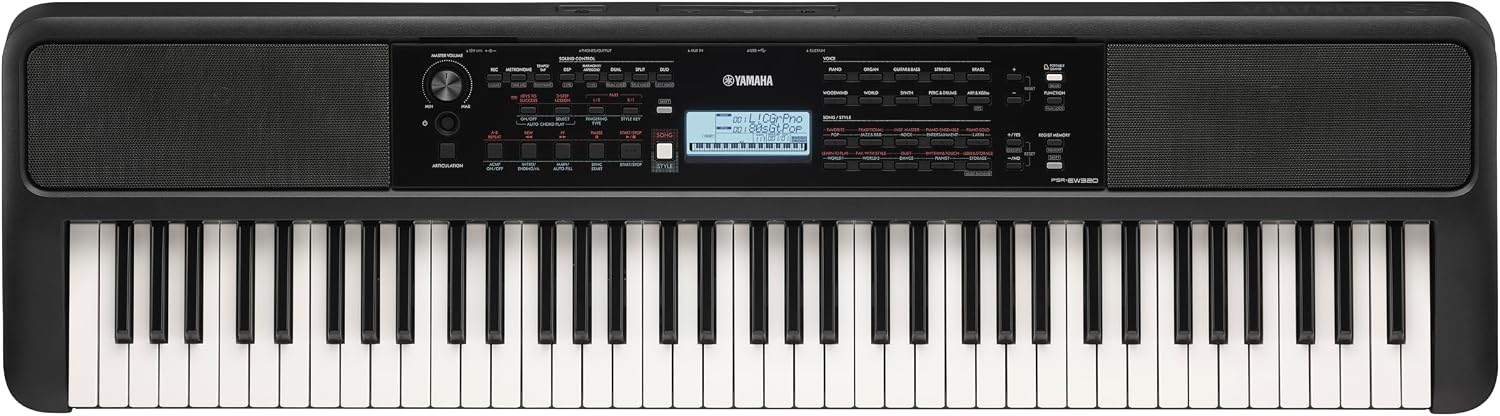
Yamaha PSR-EW320 76 Touch Sensitive Key Portable Keyboard for Beginners with Music Rest, Power Adapter
76 touch-sensitive keys in a portable beginner keyboard, shipped with a music rest and power adapter so it is playable out of the box.
Visit on Amazon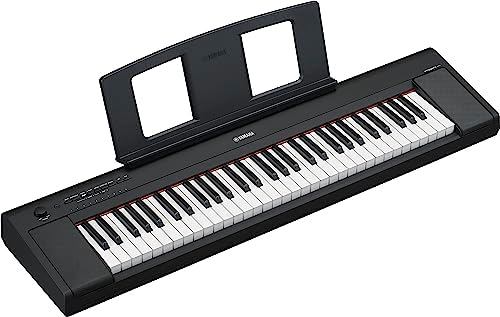
Yamaha Piaggero 61-Key Ultra-Portable Digital Piano, Touch Sensitive Keys, Metronome, Recording Function, Black NP15B
A slim 61-key piano-first board with touch-sensitive keys, an onboard metronome, and a recording function for checking your own practice.
Visit on Amazon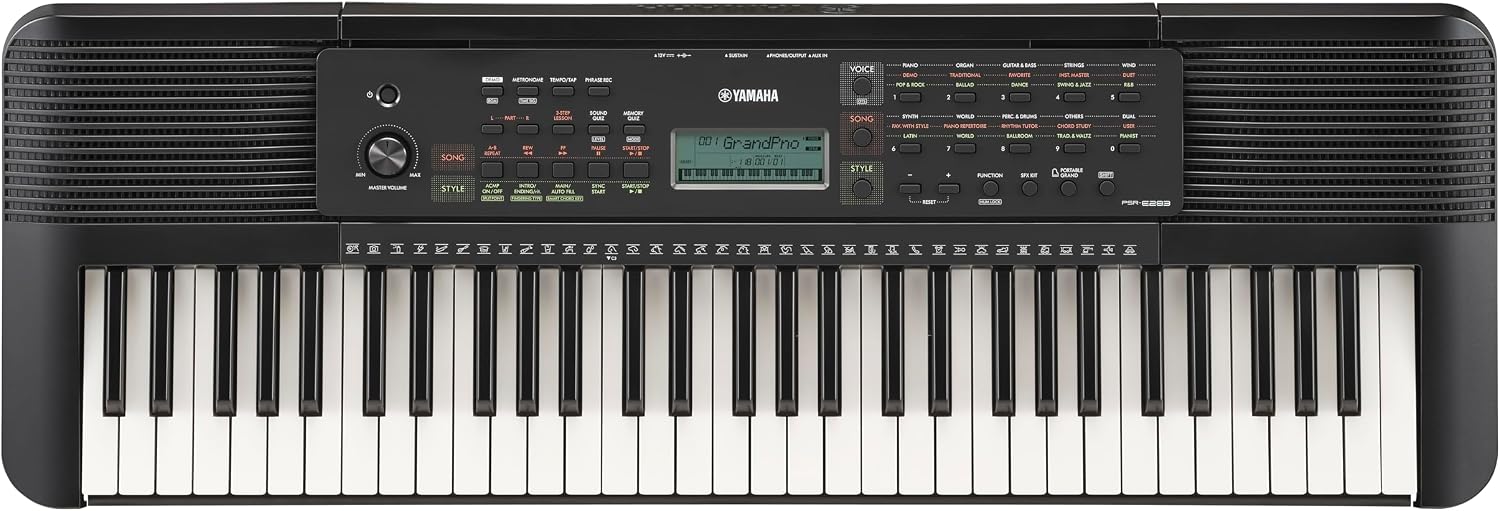
Yamaha 61-Key Portable Keyboard for Beginners with Learning Tools, Music Rest and Power Adapter PSRE283
A 61-key beginner keyboard built around learning tools, with a music rest and power adapter included in the box.
Visit on Amazon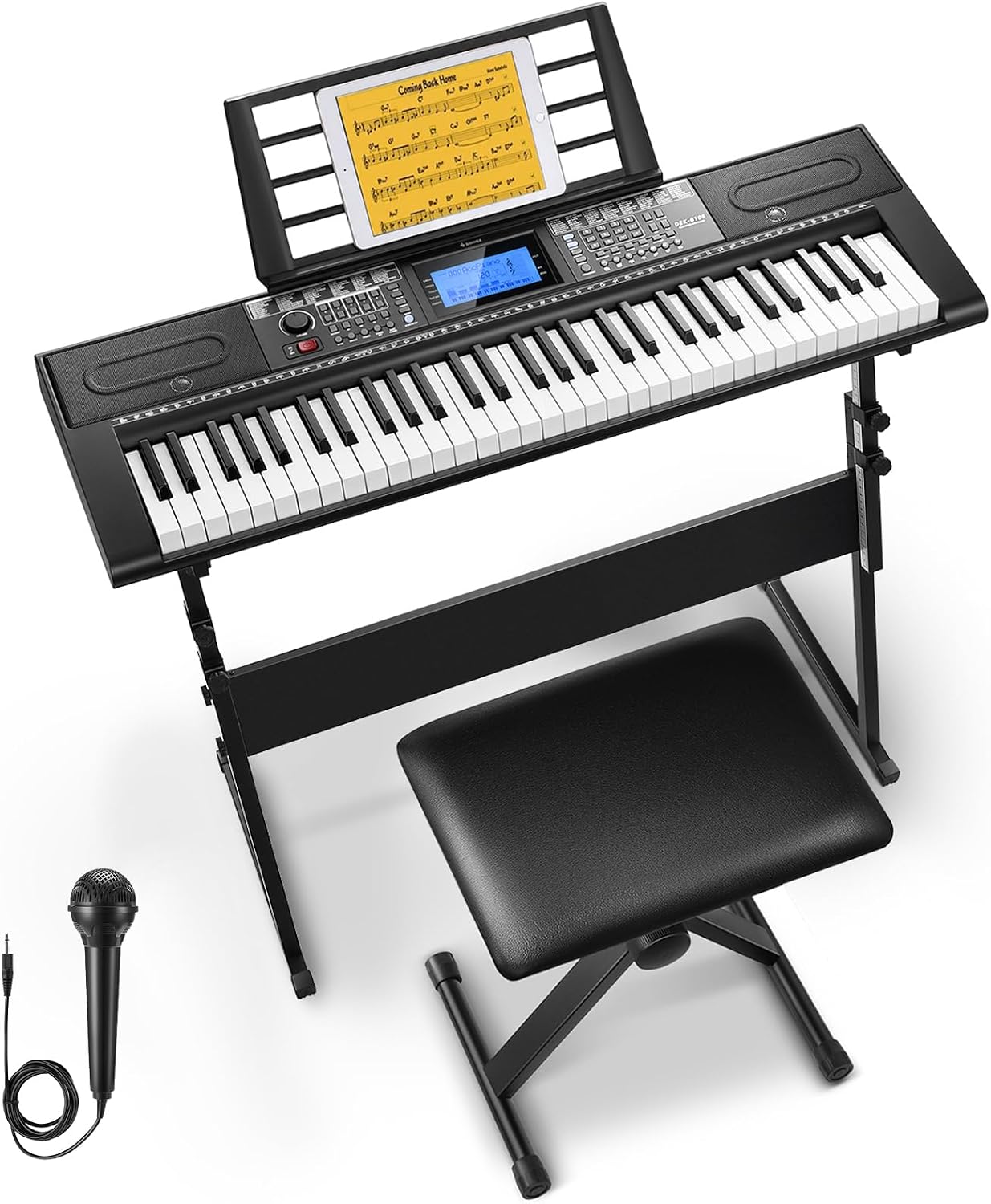
Donner 61 Key Keyboard Piano, Electric Piano Keyboard Kit with 249 Voices, 249 Rhythms - Includes Piano Stand, Stool, Microphone, Gift for Beginners, Black (DEK-610S)
A 61-key arranger kit with 249 voices and 249 rhythms, sold as a package with a stand, stool, and microphone.
Visit on Amazon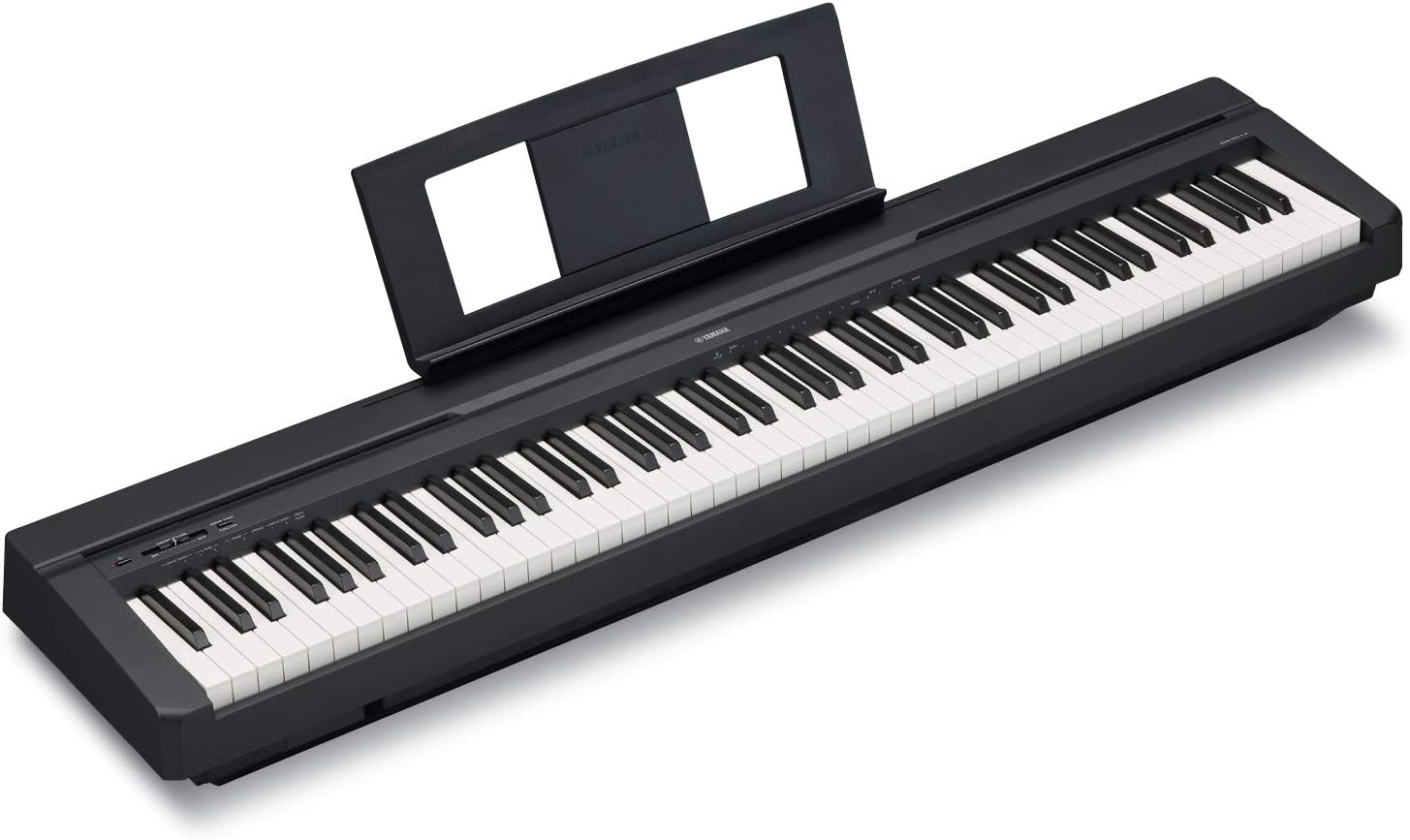
Alesis Recital Play 88-Key Piano Keyboard Bundle
An 88-key keyboard bundle, which makes it the only option here that covers the full range of the piano keyboard.
Visit on Amazon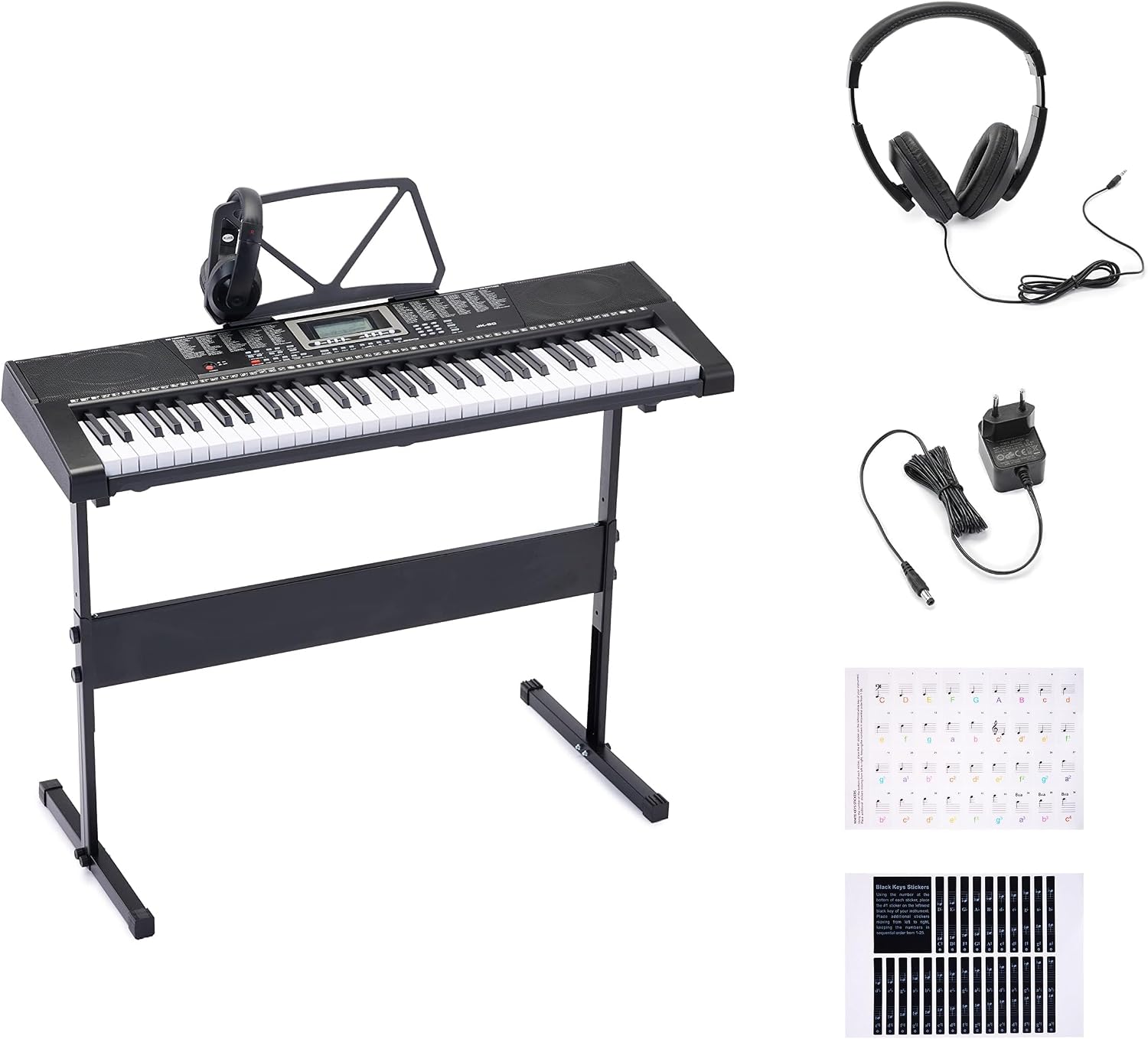
Amazon Basics Portable Electric Keyboard Piano with 61 Full Size Keys, Built-in Speakers, Songs for Learning, Digital Piano, Black
A 61-key electric keyboard with full-size keys, built-in speakers, and built-in learning songs, aimed at the lowest entry point.
Visit on AmazonPrices and availability may change. Check the retailer for current details.
How these products were compared
This guide to affordable portable & arranger keyboards compares five things: how many keys each board carries and whether they are full size, whether the keys respond to touch, what actually ships in the box, which arranger and learning features are on board, and how each instrument expects to be powered and moved. Product names, images, and retailer links are matched by product record so that every card points to the instrument shown.
Nothing here was played in a test room, and no retailer rating is quoted. What follows is a comparison of documented specifications and included accessories, plus guidance on which of those differences actually matter to a beginner, a parent, or a returning player. Confirm the current price and availability at the retailer before you commit, because this category moves constantly.
How to choose the right portable arranger keyboard
Start with key count, because it is the difference you cannot upgrade later. A 61-key board covers most beginner method books and pop repertoire, but it cuts off the top and bottom of anything written for full piano, and a student who reaches late intermediate repertoire will run out of instrument before they run out of ambition. A 76-key board recovers most of that range and remains carriable. The 88-key option here matches the piano exactly but is the largest thing on the list, so measure the space before you fall in love with the range.
Then be realistic about touch. Every instrument in this guide responds to playing force in some way, but none of them has graded hammer action, and none of them will build the finger strength a weighted keybed builds. If the player is a young beginner who needs to hear correct pitches and keep a steady beat, touch-sensitive plastic keys are fine for a year or two. If the player is an adult returning to Chopin, they will feel the limit within a month. That is not a knock on these boards, it is just what they are for.
Next, look at what ships in the box. A power adapter, a music rest, a stand, a stool, and a microphone are all real costs if you have to buy them separately, and two of the bundles here include them. Finally, decide whether you want arranger features or piano features. A board with hundreds of voices and rhythms keeps a beginner entertained and is genuinely useful for playing with other people, while a piano-first board with a metronome and a recorder is better for structured practice. If you are still deciding between keybed types, my guide to weighted vs unweighted keys goes deeper on what the difference feels like under the fingers.
Yamaha PSR-EW320 76 Touch Sensitive Key Portable Keyboard
The PSR-EW320 earns the top slot on key count alone. Seventy-six touch-sensitive keys give a beginner nearly the full compass of the piano, which means method books that wander into the top octave do not suddenly require transposing, and a student can stay on the same instrument through the years when repertoire starts spreading out. It is marketed as a portable keyboard for beginners, ships with a music rest and power adapter, and sits in the middle of this group on physical size rather than at the large end.
The trade-off is the one that applies to the whole category: touch-sensitive keys, not weighted ones. The PSR-EW320 will respond when a player digs in, and it will play quietly when they do not, but it will not develop the kind of control that comes from moving a hammer. A student using it as a second instrument alongside an acoustic, or as a first instrument for a year, will be well served. A student using it as their only instrument for four years will hit a wall. The other compromise is footprint, since 76 keys take up noticeably more shelf or stand width than 61.
Alternatives to consider
The Yamaha Piaggero 61-Key Ultra-Portable Digital Piano is better suited to the player who wants a piano, not an arranger. It drops to 61 keys and trades the feature sprawl for a slim chassis, touch-sensitive keys, a metronome, and a recording function, which is exactly the toolkit for solitary practice. If you need to carry an instrument to a lesson weekly, it is the easier lift.
The Yamaha 61-Key Portable Keyboard for Beginners is a stronger fit when the budget is tight and learning tools matter more than key count. It keeps 61 keys, ships with a music rest and power adapter, and is built around guided learning rather than around performance features.
The Donner DEK-610S, the Alesis Recital Play 88-Key Piano Keyboard Bundle, and the Amazon Basics Portable Electric Keyboard Piano cover the three remaining buyer profiles. The Donner is the package play: 61 keys, 249 voices, 249 rhythms, plus a stand, stool, and microphone, which is the most complete first setup in one order and the most arranger-oriented board here. The Alesis is the range play, since 88 keys is the only way to match a piano exactly. The Amazon Basics unit is the floor play: 61 full-size keys, built-in speakers, and built-in learning songs at the lowest entry point, which makes it the sensible choice for a household testing whether a child will actually stick with lessons.
Day-to-day use and maintenance
All six boards are happy on a desk, a table, or a stand, but a stand matters more than people expect. A keyboard that rocks while you play teaches bad habits faster than a bad sample does, so put the money into something stable, especially with the 76-key and 88-key instruments where the extra width amplifies any wobble. Keep the keybed covered when the instrument is not in use. Dust works its way between plastic keys and into the gap under them, and it is far easier to drape a cloth over the board than to clean underneath the keys.
Wipe the keys and the case with a dry or barely damp soft cloth, never a solvent, and keep the instrument out of direct sun and away from radiators, since plastic keybeds and cabinet panels do not enjoy temperature swings. Use the supplied power adapter rather than a generic one, and if the board runs on batteries as well, remove them when it lives on mains power so they cannot leak. Practice on headphones when the household needs quiet, and if you add a sustain pedal, tape it down or put it on a grippy mat, because a pedal that slides mid-phrase is its own small tragedy. Volume is worth managing too: small built-in speakers distort when pushed, and distortion is what makes a beginner think they are playing badly.
Buying checklist
- Measure the width and depth of the shelf, desk, or stand you plan to use, then compare it against a 61, 76, or 88-key footprint.
- Choose the key count based on the repertoire you actually want to play, not on the occasional edge case.
- Confirm that the exact model includes the power adapter and music rest, since bundles differ between listings.
- Decide whether you want arranger features such as voices and rhythms, or piano features such as a metronome and recorder.
- Read the cleaning and care instructions for the keybed and cabinet finish.
- Verify the current retailer price, availability, and return terms before ordering.
Final recommendation
Choose the Yamaha PSR-EW320 76 Touch Sensitive Key Portable Keyboard when you want the widest range in a portable beginner instrument and you accept that the keys are touch-sensitive rather than weighted. Choose the Yamaha Piaggero 61-Key Ultra-Portable Digital Piano when portability and a piano-first feature set matter more than the extra octave. If a complete first setup in a single order is the priority, the Donner kit is the practical answer, and if the player needs the full 88-key range, the Alesis bundle is the only option here that delivers it. Whatever you pick, budget for a stable stand and a proper sustain pedal, because those two accessories do more for daily practice than any specification on this page.